Review Article | | Peer-Reviewed

Integrating Environmental Health and Food Security: The Agronomist’s Role in Advancing Sustainable Agriculture and Achieving UN Sustainable Development Goals

Published in Plant (Volume 13, Issue 2)
Received: 28 April 2025     Accepted: 20 May 2025     Published: 18 June 2025
Views:       Downloads:
Abstract

The review explores the intricate relationship between agricultural practices, climate change, and the United Nations Sustainable Development Goals (SDGs), particularly focusing on SDG 2: Zero Hunger. It highlights the profound impact of climatic variations on crop yields, increased frequency of extreme weather events, and the proliferation of pests and diseases, all contributing to reduced agricultural productivity. This poses significant challenges to achieving the SDGs of eradicating hunger and poverty. Smallholder farmers have adopted various adaptive measures, such as adjusting farming operations, on-farm diversification, and improved soil-water management. However, industrial agriculture, while successful in increasing calorie production, has led to biodiversity loss, soil degradation, and greenhouse gas emissions, thus failing to eliminate hunger and leading to widespread micronutrient deficiencies. Approximately 815 million people are currently undernourished, with two billion suffering from micronutrient deficiencies. The paper emphasizes the necessity for sustainable agricultural practices that enhance productivity while protecting ecosystems. Key strategies include improving irrigation, adopting integrated weed management, using precision agriculture, and reducing post-harvest losses. The review underscores the importance of policy interventions and innovative technologies in addressing the global food security challenge. Effective food security strategies must incorporate sustainable production practices, leverage genetic diversity, and ensure economic and physical access to nutritious food. Addressing food security within the framework of SDGs requires a holistic approach that integrates environmental sustainability, economic development, and social inclusion. Collaborative efforts between governments, scientists, and local communities are vital to achieving a sustainable and food-secure future.

Published in Plant (Volume 13, Issue 2)
DOI 10.11648/j.plant.20251302.13
Page(s) 53-75
Creative Commons

This is an Open Access article, distributed under the terms of the Creative Commons Attribution 4.0 International License (http://creativecommons.org/licenses/by/4.0/), which permits unrestricted use, distribution and reproduction in any medium or format, provided the original work is properly cited.

Copyright

Copyright © The Author(s), 2025. Published by Science Publishing Group

Keywords

Sustainable Agriculture, UN SDGS, Food Security, Climate Change, Zero Hunger, Agricultural Productivity, Integrated Weed Management, Precision Agriculture

1. Introduction
Climate has a significant impact on agriculture rising temperatures have most adverse effects on crops yield . Extreme weather events are expected to occur more frequently as a result of prolonged shifts in the climate can start and change when outbreaks of pests and diseases occur decreases the efficiency of water and utilization of nutrients . It makes yield fluctuation more . These repercussions would further restrict agricultural production and endanger global attempts to end hunger and starvation, two of the United Nations' seventeen Sustainable Development Goals (SDGs) . Plans for adaptation have been started in response to the effects of climate change. Farmers have been using a variety of adaption plans and tactics in the agriculture sector. The scheduling of farm activities, on-farm diversification, and soil-water executive management through enhanced irrigation, less tillage, etc. are some of the major agricultural adaptations practiced by small-scale farmers worldwide . The General Assembly of the United Nations (GA) recognized the "Zero Hunger" goals of the Sustainable Development Goal in 2015, expressing worries about how sustainable the world's food systems are. By include targets on sustainable agriculture in the larger effort to eradicate hunger, the Zero Hunger goal represents a long-overdue awareness that industrial agriculture affects critical ecosystem processes that are necessary for the supply of food . These well-established effects include eutrophication and aquatic environmental damage, soil erosion, loss of soil organic matter, increased pest pressure, diminished biodiversity, and the production of greenhouse gases . The U.N. Food and Agricultural Organization of the United Nations only recently altered the term "food security" to "food and nutrition security," indicating a rise in micronutrient deficiencies, even if the globe is awash with "calories." Currently, up to two billion people are struggling with a lack of micro nutrients, and 815 million individuals are undernourished . The Sustainable Development Goals (SDGs), which were adopted as part of the United Nations (UN) Agenda for 2030, consist of 17 objectives and 169 targets that provide a path toward a more ecologically friendly world for future generations. The Sustainable Development Goals, or SDGs, are intend to bring down global poverty in order to solve the concerns of sustainability, disparity, and hunger; manage environmental degradation and climate change; and lessen risk management during extreme weather events. Every action performed toward one of the 17 objectives has an impact on the advancement of the others, and they are all interrelated. With this editorial, the magazine "Environmental Sustainability" is starting a series that will deal with those objectives that are directly related to sustainability and the environment in order to provide insight into the current state of the SDGs. Climate has a significant impact on agriculture; numerous studies show that most crop yields are adversely affected by temperature increases. The purpose of the attached document is to summarize how climate change affects agriculture and food security, particularly focusing on SDG 2: Zero Hunger. It explores adaptive measures adopted by smallholder farmers and critiques the consequences of industrial agriculture. By addressing research gaps, the review proposes sustainable agricultural practices to enhance productivity while protecting ecosystems, offering policy recommendations to achieve global food security goals.
2. Achieving SDG 2: The Path to Zero Hunger Through Sustainable Agriculture and Development Goals
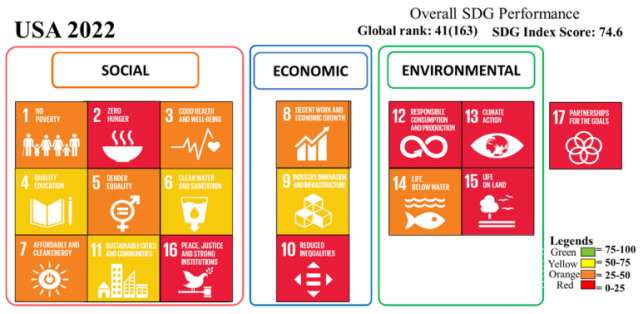
In order to attain social, environmental, and financial stability, the United Nations (UN) has embraced the idea of SD, or environmentally friendly growth "To fulfill the needs of this generation without damaging one power of future generations to continue to provide for their own needs and a fair division of the environmental effects and advantages of GDP growth between and within countries" is the main goal of SD . The United Nations General Assembly issued a resolution in the form of the Millennium Declaration calling on leaders worldwide to figure ht against poverty, hunger, destruction of the environment, and prejudice directed at women, A/RES/55/2). So as to fulfill these pledges, the UN developed the Millennium Development Goals (MDGs), which set targets to be met by 2015. But development was uneven and limited to countries . With the goal to sustain the momentum created by the MDGs and further direct the worldwide SD framework, participating nations agreed the UN Sustainable Development Goals (SDGs) in 2015. The 2030 Agenda included a 15-year strategy to accomplish the Global 17 Sustainable Development Goals (The General Assembly adopted this Resolution on 25 September 2015). With one of the strongest economies in the globe, the USA is also at the forefront of technical advancements, especially in the domains of computers, medicine, pharmaceuticals, airplanes, and military gear . With little leverage and little funding risk, the banking industry also seems to be robust. However, the USA got a "red" grade, which denotes a 25% performance, which is well below the 100% achievement for six of the seventeen Sustainable Development goals .
Figure 1. Sustainable Development Goals Index Dashboard for the USA .
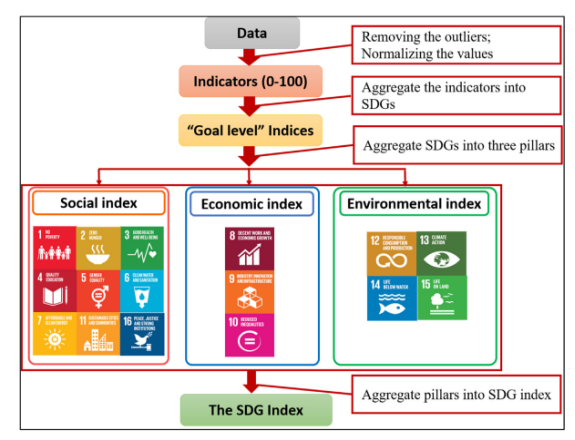
Figure 2. Methodological Framework for Aggregating SDG Indicators into Composite Indices .
The USA did not score green (meeting 75–100% of the objectives) for any of the SDGs, despite the fact that the majority of the goals place a significant value on poverty, expanding sustenance, and access to basic services and infrastructure (SDGs 1–9). In addition to increasing GDP, other economic goals including wealth distribution, innovation, and infrastructure are also crucial for achieving SD. The USA trailed behind on SDGs 8 and 10, but exceeded 50% on SDG 9 . Subnational governments are essential to attaining the SDGs, even though national governments have embraced them. The states have a great deal of power in a federal system. There is a written constitution for every state. Additionally, any power not expressly granted to the federal government by the Tenth Amendment of the United States Constitution remains with the states and the people Constitution. Local governments are established by each state to help it carry out its constitutional duties. In addition to keeping crucial data and enforcing the law, local governments frequently offer local services. As they incorporate the SDGs into the current planning procedures, fill in information and connection gaps caused by administrations, and take the lead in recognizing and meeting local necessities for long-term, significant change, cities all around the globe are learning from one another . Lynch et al. (2019) shown that whether examining cities in the USA of similar dimensions or geographically situated or when comparing findings from the city, state, and global SDG indices, localization is crucial. The practice of taking into account subnational settings in order to accomplish the 2030 Agenda is known as localization. Localization is related to . The most intriguing transnational the venture on the route to SD is the SDGs . The amalgamation of SD components into a three-pillared approach to human well-being that integrates the economy (economic development), society (social inclusion), and environment (environmental sustainability) is the clever and creative message conveyed by the SDGs (UN General Assembly, 2015) environmental, social interactions, and monetary variables or objectives. Three interconnected "pillars" have been employed in the SD three-pillars model , "dimensions" , "aspects," etc. According to the three-pillar paradigm, SD necessitates a seamless execution of all three pillars.
3. Objectives and Targets of SDG 2: Achieving Food Security and Sustainable Agriculture
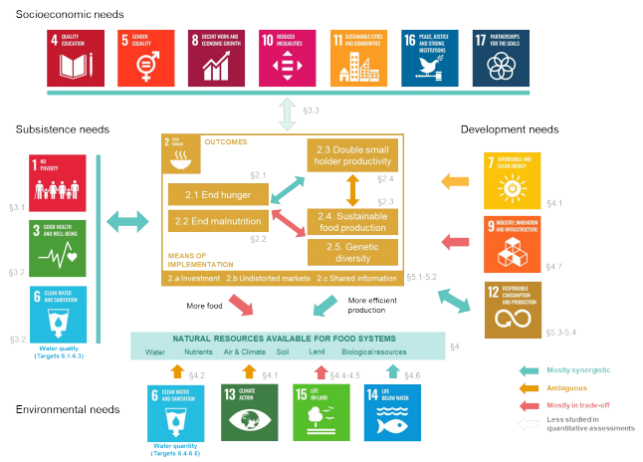
"End hunger, secure food insecurity and promote sustenance and promote sustainable agriculture" is the UN (2015) definition of SDG2, a wide goal that includes both sustainable production and food security. Five outcome goals are covered by this aim (Figure 2). There are inherent conflicts and difficulties with this goal.
The primary SDG relationships—which are mostly helpful or in trade-off—are shown by colored arrows. Studies with fewer relationships are indicated through light hues or dashed arrows. Grey text (§X.X) contains references to specific components of the article that discuss the different targets/goals and how they interact. The five result objectives that make up SDG2 "Zero hunger" may be summed up as follows: 2.1: eliminating hunger and guaranteeing access to enough food that is safe, nourishing, and sufficient, 2.2: eliminating all types of malnutrition, 2.3: increasing small-scale food producers' revenue and agricultural production by double, 2.4: preserving the genetic variety of farm assets, and 2.5: making sure food production systems are robust and sustainable. The three "mean of implementation" goals established to assist in achieving the aforementioned results are not shown here: 2.a: boosting rural development and agricultural investment; 2.b: avoiding trade barriers and market distortions; and 2.c: improving interaction for the smooth operation of the agricultural market .
Food safety and nutrition (FSN) is based on the four pillars of availability, access, utilization, and consistency , which governs and was built around the acknowledgment of human rights to appropriate food. This concept is directly tied to the first couple of goals. Achieving SDG 2 requires an understanding of these challenges, particularly Targets 2.1 and 2.2 on malnutrition and a sustainable supply of food. The cost of wholesome meals is a challenge since the food security pillars demonstrate the need of producing enough food ("availability") as well as the consequences of income and food costs ("access" pillar). In addition, the diversification of food sources ("consumption" pillar) comes into contact on malnutrition. The scope of SDG 2 is expanded to include agricultural production methods through Targets 2.3, 2.4, and 2.5. In order to achieve SDG1 ("No poverty"), Target 2.3 places a high priority on small-scale farmers' agricultural income through an increase in farm production. However, this goal should be accomplished without endangering Target 2.5 stresses the value of maintaining genetic variety, whereas Target 2.4 stresses sustainable production methods.
3.1. Addressing Global Food Demand: Ensuring Adequate Food and Reducing Hunger (Target 2.1)
There has long been concern about the ability of humanity to generate sufficient food for its own internal sustenance. The Club of Rome report highlighted the difficulties of continuous economic expansion in a finite planet, while questioned the viability of a continuing population rise . According to current UN estimates, there is expected to be an estimated 9.7 billion individuals on the planet in 2050 (up 25% from 2020), with roughly twice as many people living in Africa. Additionally, additional factors including urbanization, globalization, dietary changes, and changes in the economy will increase food consumption even more . Due to the requirement to produce feedstuffs for expanding animal consumption, the FAO projects that between 2015 and 2050, the overall food calorie demand would rise by 39% . At the same time, agricultural yield will grow more rapidly (40–45%) . With other assumptions about the need for animal products, some writers predict even larger demand by the middle of the century. For example, predict that agricultural demands would grow by 50% by 2050, while predict that food demand will increase by 30%. When comparing estimates from several global model forecasts, discovered that the rise in food demand from 2015 to 2050 ranged from +43% to 70%, which is somewhat higher than FAO estimates. Even while the models examined differed in their predictions for the future, the majority predicted a far greater rise in the consumption of animal products by 2050, ranging from 45% to 160%, which is significantly higher than the FAO's projected increase of 55%. Additional empirical estimations with 64–95%, with 81%–102%, and with 76% also corroborate this expectation.
Figure 3. This study examines the goals of SDG 2 and how it relates to other SDGs.
3.2. Navigating Nutrition: Addressing Dietary Needs, Nutrition Transition, and Malnutrition Challenges (Target 2.2)
Just as important as the quantity that we eat is what we eat in order to maintain food security. For this reason and others, the "utilization" centerpiece is fundamental for food security. Animal husbandry provides a useful illustration of many of the challenges associated with economic expansion. As with other goods, the nutrition shift affects our need for nutrients like fat and protein . However, increasing animal production has significant sustainability consequences and is resource-intensive . A third of marine catches are unsustainable , and the rapid growth of aquaculture increases resource pressure and causes local pollution . However, eating seafood also offers high-value nutrients . Because of their yield and place of production, several other food items have extremely unique footprints, and trading can have an influence . Therefore, dietary choices can have a significant impact on both the environment and human health . As part of the synergies with SDG3, we go into further detail in Section 3.2 about the health implications of the various nutritional issues linked to food choices.
3.3. Balancing Increased Food Production with Environmental Sustainability (Target 2.4)
As previously said, increasing food production will be necessary to meet nutritional demands and eradicate malnutrition, which might present significant concerns to the food systems and environmental sustainability. Researchers have cautioned about the hazards of breaking certain planetary boundaries as a result of agriculture's development and intensification. The effects of increased agricultural output on natural resources are well documented . Therefore, Target 2.4, which highlights the need for sustainable food production systems, improved agricultural methods, and environment conservation, may conflict with Targets 2.1 and 2.2, which are focused on providing more adequate food and nutrition.
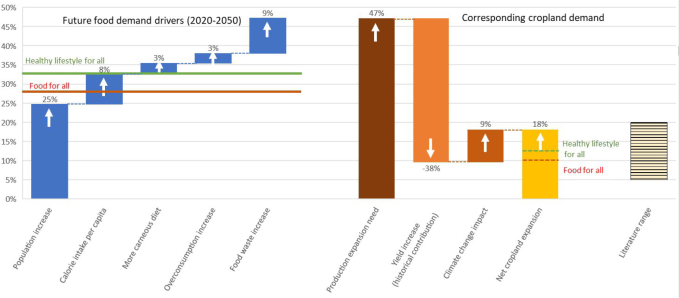
Figure 4. Future food demand breakdown from 2020 to 2050 (yellow bars on the left) and possible agricultural expansion consequences based on stylized assumptions (warm hues on the right).
Population expansion, rising calorie intake per capita due to economic growth, changes in dietary preferences that result in increased consumption of meat and feed, overconsumption, and waste all play a part in the higher overall consumption for food (sum of blue bars = 47%). The final demand increase (brown bar) was barely alleviated by the increase in yields (here based on an average 80% contribution share to match historical data, orange) and the predicted future impact of climate change (dark orange). The literature ranges (striped bar) can be compared to the net farmland growth (yellow). The blue (yellow) bar's "food for all" line represents the amount of food (land) that has increased to provide enough calories for everyone. Every customer who previously had an inactive lifestyle now leads a moderately active lifestyle, which is in keeping with the healthy lifestyle line. Sources: UN DESA population growth; the impact of livestock consumption and per capita consumption , based on the GLOBIOM model; Impacts of waste and overconsumption ; impact of climate change: RCP8.5 data from . The spectrum of literature includes Smith et al. and Stehfest et al. .
3.4. Enhancing Agricultural Productivity for Sustainable Food Security (Targets 2.3 & 2.5)
The assumption that technological advancement might minimize effects on natural resources and keep up with future increases in food demand is the basis for the majority of conventional arguments against a Malthusian future . Agricultural productivity has increased significantly in the past, shifting from an era of global productivity gains during the Green Revolution that relied on inputs and machines to one that has focused on knowledge during the last three decades . As more and more inventions and new technologies appear, there is still room for productivity to grow . And since they may boost income and give lower food costs, productivity increases will be essential for future food security , as long as they also assist small producers and net food sellers (see also Section 5.2 on the importance of trade). Thus, SDG target 2.3, which emphasizes smallholders' production and income, seems to be completely in line with SDG 2's goals for food security.
4. The Critical Role of Agronomists and Weedicides in Mitigating Climate Impact on Food Security
Because of human activities related to food manufacturing, transportation, and consumption, the climate of the globe is changing and other major environmental changes are taking place locally and globally. These changes in the natural environment include those that affect freshwater supply, plant and animal life, land cover and soils, and the carbon and nitrogen cycles . While certain regions of the world, particularly those in northern latitudes above about 558, may benefit from climate change, there is growing fear that these changes, particularly those related to climate, may make it more difficult for people in the developing countries to achieve food security. This is because the negative effects on agriculture, especially in tropical and sub-tropical nations, are often anticipated. . Three primary causes are as follows: First, it is predicted that substantial changes in rainfall and temperature would affect many regions of the developing world. For example, climate assessments for Southern Africa predict that the region will become drier and warmer ; the IPCC (2001) predicts that temperatures will rise by 2 to 5.8oC over the next few decades, and the region will experience more variable rainfall, making it generally drier, particularly in the east . It is also projected that severe occurrences (such as droughts and floods) would occur more frequently and with greater severity . Second, because of their high rates of poverty, geographic exposure, and frequently significant reliance on agriculture and ecosystems, emerging economies are more vulnerable to the direct effects of climate change . Third, agriculture is the main source of food for a large number of people in the developing countries, and a decline in agricultural productivity will have an influence on crop output and, consequently, the local food supply as a whole.
4.1. Strategies for Increasing Crop Yields: Challenges and Innovations
There are a number of strategies to raise dietary intake per person, notably extending agricultural acreage, increasing crop yields through the use of agrochemicals, organic fertilizers, biological controls, and improved soil and water management. Furthermore, it might be advantageous to promote the use of pest- and disease-resistant genetically modified organisms, or GMOs, as well as to use higher-performing plants including pest-resistant plant varieties.
In all these initial responses, some worldwide experience has already been acquired. Some of the findings are controversial, but others might be encouraging. It doesn't seem like a straightforward task to increase the area of agricultural land. In reality, there is currently a decrease in the amount of agricultural land (hectares per person) in every region of the world. For example, in Latin America and the Caribbean, this surface will decrease from 0.40 ha/inh in 1990 to 0.32 ha/inh in 2010; in North Africa and the Middle East, it will decrease between 0.28 to 0.18 ha/inh in the same future frame; and in South Asia, it will decrease from 0.22 to 0.16 ha/inh .
Population expansion is somewhat to blame, but soil erosion, fertility decline, salinization, and desertification are other contributing factors to the net reduction in agricultural land. Forest areas, many of which were designated as ecological reserves and natural parks, had to be sacrificed in order to find new territory . The lack of water is another significant issue. In Africa, the Middle East, Asia, and almost everywhere else, there is a shortage of water for agriculture in addition to drinking water. It should be remembered that 50,000 liters of water are needed to create 100 kilograms of wheat, and 200,000 liters are required to generate 100 kilograms of rice. Everywhere, the amount of water available per person is declining, and many nations are now utilizing "fossil" water—which is drawn out of deep water reserves that will run out in 20 to 30 years—for agriculture . Many areas require improved water resource management, and using plant kinds more suited to local climates will improve water usage efficiency. Currently, a more intense use of agrochemicals is likely the fastest response to the need to increase food production. Chemical fertilizers and insecticides are two major categories of substances that are classified as agrochemicals. The massive increase in the use of chemical fertilizers that has taken place worldwide since the 1960s experienced an important contributor in the so- called "green revolution," This is a massive increase in output from the same area of land because to extensive irrigation and fertilizers derived from minerals (potassium, phosphorus, and nitrogen). The commercial cultivation of rice, corn, and wheat has been an internationally acclaimed story . The development of more productive cereal grains such as wheat and rice (dwarf wheat) cultivars also contributed to this revolution.
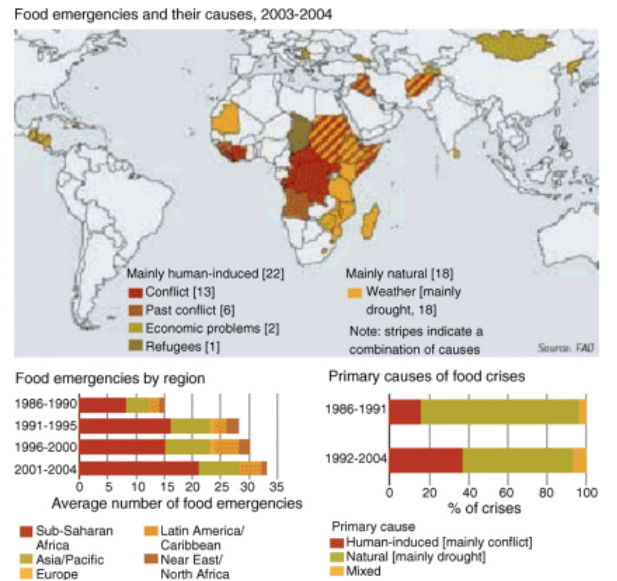
Figure 5. Regions of the world with food emergencies in last years and their causes .
4.2 Advancing Sustainable Agricultural Practices in the Cropping System
The greatest agricultural production system, the system of farming with rice and wheat (RWCS), encompasses around 14 million hectares in the southern portion of the Indo-Gangetic Plains (IGP) . Even if RWCS is essential to guaranteeing the food security and livelihood of millions in the southern Asians in the future , Turning down the condition of the earth has impacted the route to success , Resources associated with groundwater , Cereal-cereal system the term monoculture and rising variations in the climate , and shifting socioeconomic conditions .
Table 1. Overview of Tillage Methods and Crop Establishment Techniques in the Rice-Wheat-Greengram Rotation (2015-2019) .

Parameter

Crop

BPT5204 (CV1)

LPTA (CV2)

CV3S1 (CV3)

ZTWS (ZT4)

ZTMS (ZT5)

MS (ZT6)

CTWS (CT4)

CTMS (CT5)

Village

Cultivator 2 passes, tilly village (V1)

Cultivator 1 pass (next village V2)

Zero till

Zero till before transplanting

Cultivator 2 passes + Rotavator 1 pass

Zero till

Cultivator 2 passes

Zero till

Rice

Manual

Manual

Manual

Manual

Manual

Manual

Manual

Manual

Wheat

Drill sowing

Drill sowing

Drill sowing

Drill sowing

Drill sowing

Drill sowing

Drill sowing

Drill sowing

Greengram

~10% missed

~10% missed

~10% missed

Line sowing (Happy Seeder)

Line sowing (Happy Seeder)

100% in interrow

~10% missed

~10% missed

Crop establishment

Rice

Manual

Manual

Manual

Manual

Manual

Manual

Manual

Manual

Sowing age

25 days

25 days

25 days

18 days

13 days

25–30 cm row spacing

25–30 cm row spacing

25–30 cm row spacing

Wheat

Drill sowing

Drill sowing

Drill sowing

Drill sowing

Drill sowing

Drill sowing

Drill sowing

Drill sowing

Greengram

~10% missed

~10% missed

~10% missed

~10% missed

~10% missed

100% in interrow

~10% missed

~10% missed

Residue management

Rice

Wheat

Retained

Retained

Retained

Retained

Retained

Retained

Retained

Retained

Greengram

Retained

Retained

Retained

Retained

Retained

Retained

Retained

Retained

4.3. Minimizing Post-harvest Losses: A Critical Step in Food Security
Following harvest, the loss is the decrease in the quantity and quality of food produced by food production to be consumed. Quality losses affect the merchandise's acceptability, edible qualities, and nutritional/caloric content. According to Kader (2002) , these losses are frequently more common in developed countries. A merchandise's quantity can drop as a result of quantity losses. Qualitative loss is more probably to occur in economies that are developing . A recent FAO study found that while food loss and waste are more common in the succeeding phases of the food chain in countries with higher incomes, they are more common in the beginning phases in low-income areas . United States of America: US$48.3 billion (€32.5 billion) is spent annually on the disposal of 30% of all food consumed in the US. About fifty percent the water required to produce this food is thought to be wasted as well, since agriculture is the human activity that uses the most water varying factors in the industry, farm-level losses are frequently within 15 and 35 percent. Interestingly, the retail industry as a whole has very high loss rates of about 26%, but retailers only suffer losses of about 1%. Each year, losses range from US$90 billion to US$100 billion .
4.4. Best Practices for Using Weedicides in Sustainable Agriculture
CA has a major impact on population growth of weeds as well as thus, weed control. Tillage affects weeds through variations such weed cutting, burying, uprooting, and dislodgement, along with disrupting the soil environment and affecting weed germination, emergence, when maintenance by either promoting or hindering their movement . Depending on the tillage method, the breakdown of invasive species vegetation changes, thus we need to employ different management techniques. For instance, small-seeded weeds proliferate under CA and need particular care . The reduction of tillage might contribute to severe challenges with weed infestations . An important barrier to weed control underneath CA is an evolution in weed dissemination by plants and animals and density, which could lead to decreased agricultural production . The cultivation of land arrangements clearly effects on spray of herbicide deposits at banks, weed their density, and weed dispersion (Table 1).
Table 2. Weed Dynamics under Different Tillage Regimes .

Tillage System

Weeds Presence

Remarks

Other Details

Above ground

Seed bank

Above ground + seed bank

Moldboard plough

Amaranthus spp., Capsella bursa-pastoris, Setaria viridis, Chenopodium album, Digitaria ischaemum, Ambrosia artemisiifolia

Amaranthus retroflexus, Chenopodium album, Plantago major

Amaranthus theophrasti, Chenopodium album, Setaria spp., Digitaria ischaemum, Ambrosia artemisiifolia

Chisel plough

Amaranthus retroflexus, Capsella bursa-pastoris, Setaria viridis, Chenopodium album, Digitaria ischaemum, Ambrosia artemisiifolia

Plantago lanceolata, Polygonum lapathifolium

Amaranthus theophrasti, Chenopodium album, Ambrosia artemisiifolia

Ridge till

Amaranthus retroflexus, Physalis heterophylla, Capsella bursa-pastoris, Setaria viridis, Chenopodium album, Digitaria ischaemum, Ambrosia artemisiifolia

Plantago lanceolata, Polygonum lapathifolium

Amaranthus theophrasti, Chenopodium album, Ambrosia artemisiifolia

No till

Amaranthus retroflexus, Physalis heterophylla, Capsella bursa-pastoris, Setaria viridis, Chenopodium album, Digitaria ischaemum, Ambrosia artemisiifolia, Taraxacum officinale, Elymus repens, Solanum nigrum

Alopecurus myosuroides, Chenopodium album, Setaria viridis

Chenopodium album, Setaria viridis

Newly formed weed seeds that remain on or close to the soil surface may be encouraged to germinate and emerge by CA. Furthermore, the effectiveness of herbicides may be hampered by the additional residues that are handled on the ground in California. It is challenging to control perennial, upright, or creeping weeds under CA because they generate vegetative reproductive elements such rhizomes and tubers . The timing of weed seed germination and emergence varies throughout crop growth, which can lead to issues when choosing when to apply herbicides or other management techniques .
There have been conflicting reports of the change in weed species in the past. Wrucke and Arnold (1985) countered this pattern by pointing out that the spread of broadleaved weeds showed a similar trend under conservation tillage and regular tillage systems, despite reporting an increase in dicot species under no till. After studying a variety of weeds, came to the conclusion that there was no appropriate and consistent trend of various weeds with reduced tillage. Distinct tillage regimes have distinct effects on the establishment of annual and perennial weeds, and there are notable differences in the vigor of various weed species (Table 2).
Table 3. Effect of Tillage Systems on Weed Density and Biomass .

Tillage system

Weed density (m²)

All weeds

Annual

Chenopodium album

Echinochloa colona

Cucumis prophetarum

Perennial

Cynodon dactylon

Cyperus rotundus

Fresh wt. (kg m²)

No till

17

62 ab

18

86 a

117 a

300 a

1.37 a

0.27 b

Reduced till

17

83 a

9

33 b

69 b

211 b

0.97 b

0.22 b

Deep till

20

44 b

6

35 b

101 ab

206 b

0.84 b

0.21 b

4.5. Effective Strategies for Integrated Weed Management (IWM)
A crop's health hinges on its successful execution, and integrated weed management (IWM) is a management strategy that focuses on raising consciousness regarding this. They see it as the result of multiple weed control components interacting with one another . The practice of utilizing every technology at your disposal to ecologically friendly practices control weeds from fields while coordinating the use of important and little information about the environment, ecology, and biology of weeds is known as integrated weed management, or IWM. The methodology of deciding matters, weed biology and ecology, integrated weed management (IWM) components commonly used to agricultural patterns, pesticide susceptibility level, transgenic plant ecological difficulties, and weed welfare are the main areas of research on IWM . Gathering environmental data and studying the environmental factors and the natural world of weeds while utilizing all available technology for manipulating them is known as integrated weed suppression, or IWM . Reason why farmers are hesitant to replace herbicides with non-chemical weed management techniques.
1. The "inconvenience" factor generally more challenging and time-consuming to overcome.
2. More money to spend, particularly if there is no decline in the consumption of herbicides.
3. Dangerous; compared to herbicides, control levels are inconsistent and more unpredictable.
4. Herbicides are better at killing plants.
5. More costly than herbicides compared to the degree of control attained.
6. Rising demand for labor; consequences for affordability and pricing.
7. Inadequately supplied or undertrained staff.
8. There isn't much obvious proof of instant success.
9. Not wanting to make the suggestion since it is risky for utilized for agriculture agronomists and consultants.
10. Reluctance to provide suggestions since herbicide the provider returns are lower.
11. No reimbursement after a monitoring breakdown (herbicides are more prone to cause this).
12. May negatively impact the ecosystem (e.g., the breakdown of soil following extensive cultivations).
13. Greater workout than spraying (e.g., rucksack spritzer versus hoe).
14. Temporary goals; unwillingness to dedicate oneself to goals for the future.
15. Indulgence: the conviction that current issues will be accomplished by new herbicides.
16. Reliance on excellent climate conditions (e.g. for prolonged cultivation or a substitute crops).
.
5. Advancing Agriculture Through Precision Application
The principle of site-specific management (SSM) is to act appropriately at the appropriate time and location. Although this concept is as antique as agriculture itself, there was significant economic impetus to apply consistent agricultural methods to big fields throughout the 20th century's agricultural mechanization. SSM is now feasible in commercial agriculture thanks to precision farming, which offers a means of automating it with information technology. PA encompasses all agricultural production methods that use information technology, such as yield monitors, remote sensing, and variable rate application (VRA), to either monitor or customize input use to achieve the expected outcomes
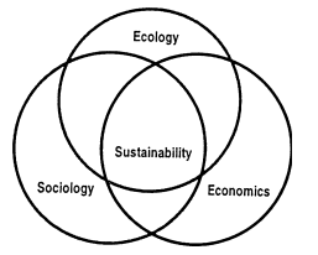
Figure 6. Sustainability as described by the intersection of three disciplines: ecology, economics and sociology.
Define SSM as “the Inputs for agricultural production are allocated in time and space using technological surveillance and oversight applied to the gathering of data, information processing, and decision support" . They point out that although agronomic crops are the main emphasis, the reasoning also apply to horticultural crops and animals subject to electronic tagging. Input management for temporal SSM must be based on knowledge of the life cycles of agricultural products, livestock, or pests. The term growth phase (DS) information is frequently used to describe this temporal information (. For example, DS approaches to management such as utilizing pest scouting to assess the necessity and timing of pest control are widely employed in integrated pest management. Animal husbandry management also makes use of DS management: Individual dairy cows' milk production, food intake, and health are monitored using bar-coding and other sensors .
Strategies for Effective Herbicide Resistance Management
Herbicide-resistant (HR) weed populations have grown as a result of selective pressure resulting from contemporary agricultural management practices. This reaction to herbicides was predicted by Harper (1956), who claimed that "the most efficient extent of deciding on is that that shrinks a community to a small resistant residue which is able to maintain rapid generation." Harper's research contains two fundamental ideas that are essential to managing weed killer resistance today: (1) lowering the degree of selection and (2) stopping the remaining resistant individuals from reproducing. Any special, resistant individuals in the weed population have a selective advantage when herbicides are applied to sensitive weeds before they reproduce. Because their progeny inherits the resistance trait, these fleeing slaves have a greater opportunity of surviving exposure to the exact same herbicide mechanism of action (MOA) if they procreate. Repeated use of the same herbicide or, sometimes, the equivalent MOA creates persistent, unidirectional selection pressure that leads to the proliferation of resistant plants in an invasive plant population. These resistant biotypes are more likely to survive and procreate under such hardship. By selecting for distinct biotypes that have not yet emerged or are not in the optimal development phase when influence is applied, repeating the same control strategies at particular times—whether through the use of herbicides or nonchemical control methods—may also result in the evolution of avoidance of the processes in a weed population . In Asian rice (Oryza sativa L.), for instance, traditional hand-weeding has led to selection favoring barnyard grass (The fungus E crus-galli (L.) Beauv.) Communities that phenotypically resemble rice, making it more difficult to distinguish between them at vegetative development stages . As a result, when a specific management strategy is applied consistently without modification, hypersensitivity or evasion is more likely to develop. Glyphosate application in GR crops may have increased the variety of weed-control strategies.
Table 4. Herbicide types commonly used in corn, soybeans and cotton, selective (S) and herbicide-resistant crop enabled (R) Herbicide type (group).

Herbicide type (group)

Corn

Soybeans

Cotton

Canola

ALS-inhibitors (B)

S

S + R

S

S + R

ACCase-inhibitors (A)

S + R

S

SS

S

HPPD and PDS inhibitors (F)b

S

R

R

Synthetic auxins (O)b

S + R

S + R

R

PPO inhibitors (E)

S

S

S

PSII inhibitors (C)

S

S

S

Cell division inhibitors (K)

S

S

S

S

Lipid biosynthesis inhibitors (N)

S

S

S

S

Auxin transport inhibitors (P)

S

Glyphosate (G)c

R

R

R

R

Glufosinate (H)c

R

R

R

R

a Herbicides grouped according to the Herbicide Resistance Action Committee, http://www.plantprotection.org/hrac. b Auxin and HPPD resistance crops are not commercial but still under development. c Glyphosate, glufosinate and paraquat (D) are also used before crop emergence for burndown.

Glyphosate was a novel mechanism of action, and producers are not required to use it on GR crops. But herbicides was good enough for many producers to use it year after year, and as glyphosate usage in GR crops rose, fewer selective herbicides were used . For instance, in 1995, before GR crops were available, there were eleven herbicide actives employed on at least 10 per cent of the US soybean land; by 2002, there was just one herbicide active, glyphosate. Atrazine is second in popularity with less than 6% of the overall herbicide volume, while glyphosate continues to dominate the worldwide herbicide market today with 65% of the total volume. 30 The amount of glyphosate used by growers is still rising; between 2005 and 2012, the amount used rose from 30 million to 45.5 million kg.
6. Addressing Global Food Security Challenges: Key Factors and Strategic Solutions
The EU claims that a number of factors, such as a lack of market integration among EU countries, suboptimal business-to-company relationships, a lack of transparency in the food supply chain, and a lack of appeal for skilled workers, are contributing to the decline in competitiveness in the food and drink sector . These issues are not specific to the European Union and are intimately linked to food security challenges in other regions of the world. It can be concluded that there is no single root explanation for the issue of global food security, even though there isn't a single solution.
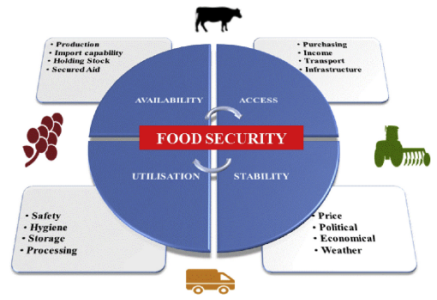
This section outlines the primary reasons of global food insecurity, which should be considered while identifying the essential components required to create a solution. Food security is defined by the FAO as "a situation in which all people, at all instances, have physical, social, and economic access to sufficient, safe, and nutritious food which meets their nutritional requirements and preferred foods for an active and healthy life." These problems are appropriately addressed by the writers using this definition. The concept of food security is based on four main pillars, each with a primary focus (Figure 7).
Figure 7. The Four Pillars of Food Security .
Each pillar is of equal importance and must be treated with equal levels of consideration. These four key pillars are .
Table 5. Wheat Production and Provision Across OECD and Non-OECD Countries (2008-2022) .

Wheat Production and Projections

Thousand Tonnes

Country/Region

2008

2009

2010

2011

2012

2013

2014

2022

OECD

264185

275860

274800

276786

278216

278640

278640

288795

Australia

21601

21930

27349

29905

22855

25303

23281

36246

Canada

28611

26529

23174

25261

27205

37529

29404

33820

Chile

1455

1434

1318

1443

1262

1273

1285

1397

Israel

14.5

13.5

17.0

13.9

13.7

12.2

14.2

19.1

Japan

875

906

848

831

831

831

861

946

Korea

31

32

30

31

30

34

35

36

Mexico

4788

4656

3617

3813

3700

3741

3751

3992

New Zealand

416

413

367

384

416

396

397

417

Turkey

17782

20600

19652

21815

20100

22050

19000

19800

United States

68020

60227

60061

54400

61276

57037

55128

44874

Non-OECD

440759

467560

461600

474600

506100

512240

521060

527697

Algeria

3500

6000

2900

4200

4900

3300

3000

3500

Argentina

8281

14500

11500

14700

9200

9200

13900

22000

Bangladesh

928

963

972

1003

1108

1118

1129

1557

Brazil

3601

5024

5033

5647

4381

5762

5911

10493

China

113287

115180

114470

117410

120580

121930

126170

137700

Egypt

8523

7387

7429

8374

8795

8846

9279

9800

India

80680

80680

86870

94880

93510

95850

95850

107740

Iran

13732

13972

14400

14000

14400

13400

13200

13700

Iraq

2415

2168

2100

2313

3369

3772

3910

3700

Kazakhstan

12454

17463

9016

22473

9943

13914

13695

16400

Morocco

6114

6925

3903

5410

4750

7120

6841

4550

Myanmar

558

643

657

636

558

557

557

570

Pakistan

21081

24214

23411

25214

23673

24212

23980

26750

Russia

63766

61970

41104

56123

37721

52209

59468

104440

Serbia

2262

2364

1897

2089

2020

2071

2291

3100

South Africa

2012

1896

1650

2033

1915

1780

1896

2180

Syria

4215

4015

3706

3800

4000

2510

2275

1800

Tunisia

1600

1250

1100

1800

1450

1350

1700

1500

Ukraine

25283

20890

17196

22528

15477

22930

24506

20150

Uzbekistan

6020

6220

6240

6360

6430

6460

6480

6650

Venezuela

83

91

100

112

113

118

120

130

Vietnam

90

80

85

84

85

85

85

90

Developing Countries

393279

419739

416436

428020

458378

464496

472373

488045

World

705414

743420

736400

751386

784316

790880

799700

816492

Table 6. Scoring of Food Security Levels: Comparison of 18-Item and 6-Item Modules.

Food Security Level

18-item, households with children

18-item, households without children (10 used)

6-item short form, all households

Food-secure

0

0

0

Food-secure, at risk

1–2

1–2

1

Food-insecure without hunger

3–7

3–5

2–4

Food-insecure, moderate hunger

8–12

6–8

5

Food-insecure, severe hunger

13–18

9–10

5–6†

Food Security in the USA
6.1. The US Congress and USAID Define Food Security as Follows
Constant availability of suitable food and Agricultural Export Development and Assistance Act of 1990 (P. L. 480): Nutrition for a healthy and productive life for all. Additionally, everyone should always have physical and financial access to enough food to meet their nutritional needs and lead productive, healthy lives . Similarly, food security for a household is defined by the US State Department of Agriculture (USDA) as follows: There is always enough food available for each member to lead an active and healthy lifestyle. At the very least, food security includes: (1) easy access to wholesome and secure meals; and (2) the guarantee that one can acquire the appropriate foods in ways that are acceptable in society (i.e., without resorting to emergency food supplies, stealing, salvaging, or other coping techniques) .
6.2. Definition and Components
In its simplest form, it means regularly consuming enough food for the following period of time in combination with today and tomorrow. Why is there still uncertainty when everything is so simple manipulation? To assist understand this, consider the several issues this seemingly simple concept raises. Without going too much into the nuances and complexity of the subject, the Food and Agricultural Organization, or FAO, of the United Nations, basically points out that food security is the outcome of food availability, food access, supply stability, and biological usage .
6.3. Availability
There are basically two options for distributing food when availability is taken into consideration: imports or domestic production. This calls for careful consideration of the real availability of sustenance at local markets and farms. The smooth operation of market infrastructures, the availability of enough rail and road networks, and the availability of adequate technology for the storage and processing of information all depend on this .
6.4. Access
Ensuring everyone can have sufficient material and monetary access to food through growing it, buying it, receiving it as a gift, bargaining or negotiating for it, etc., is known as food access . This idea can be viewed as a set of rights that enable individuals to acquire and maintain the proper nourishment for a suitable diet and level of nutrition. This can be acquired indirectly through local or national interpersonal interactions, including families, support networks, customary rights, access to common resources, and, of course, emergency food aid. Directly, this can be produced in a way that yields food for oneself, sufficient funds, or bartering .
6.5. Stability
Although the concept of stability is not new, there is growing worry in the food security discussion about the realization that food security may be lost as well as attained . Consequently, the concept of managing risks is becoming more accepted as a means of combating hunger. Such considerations include stability and vulnerability, which can be related to livelihoods in particular, the broader economy in general, incomes, or even food supplies themselves, with an emphasis on sudden or other shocks like pests, droughts, floods, etc. .
6.6. Utilization
The final concept is biological utilization, which essentially refers to a person's ability to absorb food as smoothly or effectively as feasible. Although the "novelty" of the word, the principle is not new. Additionally, studies have shown a substantial relationship between this talent and a person's health status, which is determined by important non-food inputs. The supply of fresh water and sanitation services, suitable health and child care, adequate knowledge of physiological and nutritional requirements, and the proper application of that knowledge have all been shown to be necessary to ensure proper biological utilization .
6.7. Challenges to Food Security in the USA
The same validated malnutrition scale was used in each questionnaire year. Ten questions have been presented to each family using the questions and alternate options from the US Department of Agriculture Food Security Survey Module. A 4-level food security status was determined based on the amount of satisfactory responses and grading from Bickel et al., :
1. Excellent protection of food (no positive answers)
2. Relative Food Security (one to two yes answers)
3. Insufficient Food Security (three to five yes answers)
4. incredibly Inadequate Food Security (6–10 yes answers)
Following that, these categories were divided into two groups: those who were food secure (category 1 and 2) and those who were undernourished (sections 3 and 4) among populations . In comparison to those who perceive food security, those who experience food insecurity usually appear younger, female, members of a racial or ethnic minority, and have less privilege or their level of education . Insufficient food supply has been found to be higher among minorities along with people with dietary-influenced persistent illnesses . Furthermore, there is evidence that men and women react differently to food insecurity, which is frequently observed in the differential impact of high BMI and inadequate nutrition in low-income women . While some research has looked into whether trends persist over time, these analyses typically concentrate on changes within subpopulations rather than the distinctions between them. The global problems of food security. In the course of the convention, poster authors, keynote speakers, and plenary session speakers underlined the many challenges encountered by plant pathologists in particular.
6.8. A List of These Problems Is as Follows
1. A dynamic environment that causes erratic and occasionally disastrous weather events that encourage the emergence of plant diseases.
2. The increased danger of disease and pest invasions due to the rapid movement of pathogens and their vectors.
3. Evolution of pathogens: overcoming host resistance.
4. The requirement for ecologically compatible vector and disease prevention materials.
5. Resilient cultivars are developed and released gradually.
6. The public's skepticism of genetic and sophisticated breeding technology.
7. Adoption of emerging technologies at the field level, integration of research into practice, and slow technology transfer.
8. A diminished ability to reach out and extend globally.
9. Scientists' limited time to educate the public about the necessity and use of creative technology solutions.
10. The requirement for consistent, dependable funding sources for outreach and research fortunately, there are others who are working on food and nutrition security besides plant pathologists. It need interdisciplinary and multifaceted teamwork to overcome these obstacles. The 2030 Agenda for Sustainable Development (SDGs) are a new set of goals that the world community came up with and agreed upon in 2015 .
7. Results
In total, 287,836 family respondents, representing 124,761,416 US families, had food insecurity data available.
Table 7. Weighted Sample Demographics by Food Security Status 2011-2017 .

Category

Food Secure

Food Insecure

P Value

Unweighted Sample

n = 254,791

n = 33,045

Weighted Sample

N = 111,582,148

N = 13,179,268

Mean Age (years)

50.2

45.9

Age Group

<.0001

18–34

23.96%

27.23%

35–49

24.86%

30.52%

50–64

27.37%

30.47%

≥65

23.81%

11.78%

Sex

<.0001

Male

44.11%

34.85%

Female

55.89%

65.15%

Race/Ethnicity

<.0001

Non-Hispanic White

71.18%

52.19%

Non-Hispanic Black

11.12%

23.50%

Hispanic

11.78%

20.06%

Other minorities

5.93%

4.26%

Ratio of Family Income to Poverty

<.0001

<1.00

12.25%

41.49%

1.00–1.99

16.60%

33.76%

2.00–3.99

33.41%

20.25%

≥4.00

37.74%

4.50%

Table 8. Logistic Models for Relationship Between Food Insecurity and Demographics .

Category

Unadjusted OR (95% CI)

Adjusted OR (95% CI)*

Age Group

18–34

ref

ref

35–49

1.08 (1.04–1.12)

1.62 (1.55–1.70)

50–64

0.98 (0.94–1.02)

1.66 (1.58–1.75)

≥65

0.44 (0.41–0.46)

0.61 (0.57–0.65)

Sex

Male

ref

ref

Female

1.48 (1.43–1.52)

1.23 (1.19–1.27)

Race/Ethnicity

Non-Hispanic White

ref

ref

Non-Hispanic Black

2.88 (2.77–3.00)

1.69 (1.62–1.76)

Hispanic

2.32 (2.22–2.43)

1.24 (1.18–1.30)

Other minorities

0.98 (0.90–1.06)

0.78 (0.72–0.85)

Ratio of Family Income to Poverty

<1.00

ref

ref

1.00–1.99

0.60 (0.58–0.63)

0.64 (0.62–0.67)

2.00–3.99

0.18 (0.17–0.19)

0.19 (0.18–0.20)

≥4.00

0.04 (0.03–0.04)

0.04 (0.03–0.04)

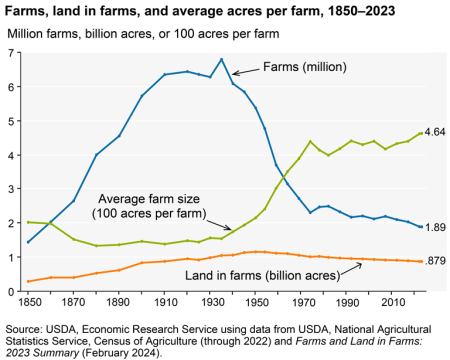
Figure 8. Farms, land in farms and average cares per farm, 1850-2023.

8. Strategies and Policies Addressing Food Security
The following order is made in accordance with the power granted to me as Presidential by the constitution and US laws, and to guarantee the responsible use of regulatory power that impacts agricultural and rural communities:
1. Sec. 1. Command. America's economy, stability, and national security are contingent upon a steady, safe, and affordably priced supply of food, fiber, and lumber. Promoting American agriculture and preserving the rural areas that provide forests, food, fiber, and many of our renewable energy sources is in the best interests of the country. Ensuring that regulatory burdens do not unnecessarily hinder agricultural productivity, negatively impact rural areas, limit economic growth, hinder job creation, or raise the cost of food for Americans and our consumers abroad is also good for the welfare of the country.
2. Sec. 2. The Agricultural and Rural Prosperity Interdisciplinary Working Group was established by them. As a result, the Interagency Task Force on Agriculture and Rural Prosperity (Task Force) was established. Within the parameters of obtainable money and to the extent permitted by law, the Ministry of Agriculture will finance and oversee its operations.
3. Sec. 3. Contribution. (A) The Working Group will be chaired by the Secretary of Agriculture and will include the following members: the Secretary of the Treasury, the Secretary of Defense, the Attorney General, the assistant to the president for domestic policy, and the assistant to the governor for monetary policy are among the other heads of executive divisions, agencies, and offices that the president or secretary of agriculture may occasionally appoint. (B) To fulfill the participant's responsibilities on the Task Force, the member might choose a senior-level individual who serves as a full-officer or member of the member's division, agency, or office.
4. Sec. 4. Aims and obligations of the assigned force. (a) The Task Force will identify legislative, regulatory, and policy changes that will boost rural America's overall standard of life, economic growth, job creation, infrastructure improvements, technological innovation, and energy security. Enhancing and expanding educational opportunities for students in rural communities, particularly in agricultural education, science, technology, engineering, and mathematics; facilitating the State, local, and tribal agencies that implement agricultural, environmental, and rural economic development programs to tailor them to the unique needs of their respective regions; removing barriers to rural America's economic prosperity and quality of life; encouraging the adoption of technological advancements for agricultural production and long-term, sustainable rural development; necessitate departments and executive agencies to use the best available research when approving or assessment crop protection equipment; acknowledge the unique circumstances of small businesses serving rural areas, as well as the different business structures and regional diversity of farms and ranches; ensure the availability of a stable labor pool and increase employment opportunities in businesses that prioritize rural and economic areas; promote changes to the estate tax and the tax value of family-owned or cooperatively-owned businesses to protect familial farms and other agricultural pursuits that are passed down through the generations; ensure that when water users apply for permits to use public lands, Enhancing food safety and guarantee the legislation and regulations adopting federal food safety laws are based on research and take into account the distinctive needs of farms and landowners; encourage the use, export, and production of domestically produced agricultural products; increase the production of sustainable and customary energy in rural areas to contribute to the nation's energy security; and remove obstacles to accessing supplies on public lands for rural communities that rely on mining, recreation, cattle grazing, timber harvesting, and other multiple uses. (a) The Task Force will be coordinated with the Deputy Assistant to President Obama for Intergovernmental Affairs and will provide farmers, ranchers, forestry workers, and other rural stakeholders with the opportunity to propose legislation, regulations, and policy changes. (c) The Task Force must coordinate its work with other regulatory or policy reviews in accordance with Executive Orders 13771 of January 30, 2017 (Reducing Regulation and Controlling Regulatory Costs), 13778 of February 28, 2017 (Restoring the Rule of Law, Federation, and Economic Growth by Reviewing the "Waters of the United States" Rule), and 13783 of March 28, 2017 (Promoting Energy Independence and Economic Growth).
5. Sec. 5. Conclusion: Within 180 days of the date of this decree, the Secretary of Agriculture, after speaking with the other members of the Task Force, shall present a report to the President through the Assistant to the President for Domestic Policy and the Assistant to the President for Economic Affairs. In line with section 4 of this order, the report will suggest any legislative, regulatory, or policy changes that the Task Force decides on are required. The Secretary of Agriculture will provide copies of the final report to each working group member.
6. Sec. 6. Revocation. Executive decree 13575, issued on June 9, 2011, created the White House Rural Council; however, it has since been revoked.
7. Sec. 7. The general principles. Any power legally granted to a government department or agency, its executive officer, or the director of the Office of Managing and Budget with regard to legislative, administrative, or budgetary initiatives should not be construed as being affected in any manner by this order. (b) This order will be carried out in compliance with current law, based on the availability of appropriations. (c) This order prohibits any party from using any substantive or procedural rights or benefits, either in law or equity, to impose obligations on the United States, any of its departments, agencies, or organizations, its officers, employees, or agents, or any other individual.
9. Conclusions
With an emphasis on SDG 2: Zero Hunger, this investigation emphasizes the complex interrelationships among agricultural practices, climate change, and the 17 Sustainable Development Goals (SDGs) established by the UN. It underscores the profound impact of climatic variations on crop yields, leading to increased frequency of extreme weather events and pest proliferation, thus reducing agricultural productivity. While industrial agriculture has increased calorie production, it has also caused biodiversity loss, soil degradation, and greenhouse gas emissions, failing to eliminate hunger and contributing to widespread micronutrient deficiencies. Sustainable agricultural practices such as improved irrigation, integrated weed management, precision agriculture, and reducing post-harvest losses are essential strategies to enhance productivity and protect ecosystems. Immediate and collaborative efforts are required to integrate sustainable agricultural practices to enhance food security while protecting the environment. Governments, scientists, and local communities must work together to implement effective food security strategies that promote sustainable production, leverage genetic diversity, and ensure access to nutritious food. Policy interventions and innovative technologies must be prioritized to address these global challenges comprehensively. Future research should focus on developing scalable solutions for sustainable agriculture that can be widely adopted by smallholder farmers. Studies should explore the long-term impacts of these practices on food security and ecosystem health. Additionally, there is a need for research on the integration of new technologies and policy frameworks that can support sustainable food production systems and address the remaining gaps in achieving SDG 2.
Abbreviations

SDGs

Sustainable Development Goals

GA

General Assembly

UN

United Nations

FAO

Food and Agricultural Organization

MOA

Mechanism of Action

FSN

Food Safety and Nutrition

MDGs

Millennium Development Goals

Author Contributions
Muhammad Awais Arshad: Conceptualization, Data curation, Formal Analysis, Investigation, Methodology, Project administration, Resources, Software, Supervision, Validation, Visualization, Writing – original draft, Writing – review & editing
Babur Ali Akbar: Resources, Software, Validation, Visualization
Ahmad Jawad: Formal Analysis, Resources, Software, Validation
Muhammad Huzaifa Mahmood: Funding acquisition, Investigation, Software, Validation
Conflicts of Interest
The authors declare no conflicts of interest.
References
[1] Ureta, C., et al., Maize yield in Mexico under climate change. 2020. 177: p. 102697.
[2] Cobián Álvarez, J. A., B. P. J. E. E. Resosudarmo, and P. Studies, The cost of floods in developing countries’ megacities: a hedonic price analysis of the Jakarta housing market, Indonesia. 2019. 21(4): p. 555-577.
[3] Nelson, G. C., et al., Climate change: Impact on agriculture and costs of adaptation. Vol. 21. 2009: Intl Food Policy Res Inst.
[4] Asplund, L., et al., Proof of concept: nitrogen use efficiency of contrasting spring wheat varieties grown in greenhouse and field. 2014. 374: p. 829-842.
[5] Torriani, D. S., et al., Potential effects of changes in mean climate and climate variability on the yield of winter and spring crops in Switzerland. 2007. 34(1): p. 59-69.
[6] Coulibaly, T., et al., The impacts of climate change and natural disasters on agriculture in African countries. 2020. 4: p. 347-364.
[7] Liu, Y. and L. J. J. o. C. P. Dai, Modelling the impacts of climate change and crop management measures on soybean phenology in China. 2020. 262: p. 121271.
[8] Jawid, A., M. J. E. A. Khadjavi, and Policy, Adaptation to climate change in Afghanistan: Evidence on the impact of external interventions. 2019. 64: p. 64-82.
[9] Rockström, J., et al., A safe operating space for humanity. 2009. 461(7263): p. 472-475.
[10] Foley, J. A., et al., Solutions for a cultivated planet. 2011. 478(7369): p. 337-342.
[11] Saint Ville, A., et al., Food security and the Food Insecurity Experience Scale (FIES): ensuring progress by 2030. 2019, Springer. p. 483-491.
[12] Keeble, B. R. J. M. and war, The Brundtland report:‘Our common future’. 1988. 4(1): p. 17-25.
[13] Steer, L., et al., Millennium Development Goals (MDG) Report Card: Measuring Progress Across Countries. 2010.
[14] Divergences, N. G. J. W. E. O., World Economic Outlook. 2023.
[15] Sachs, J. J. S. D. R., chmidt-Traub G, Kroll C, afortune G, Fuller G. 2019.
[16] Sachs, J., et al., & Woelm, F.(2021). 2021.
[17] Crosbie, E. J., et al., The Manchester International Consensus Group recommendations for the management of gynecological cancers in Lynch syndrome. 2019. 21(10): p. 2390-2400.
[18] UNPD, U. J. W. f. h. d. B. n. f. c. o. t. H. D. R. I., Human Development Report 2016. 2016.
[19] Biermann, F., N. Kanie, and R. E. J. C. O. i. E. S. Kim, Global governance by goal-setting: the novel approach of the UN Sustainable Development Goals. 2017. 26: p. 26-31.
[20] Boyer, R. H., et al., Five approaches to social sustainability and an integrated way forward. 2016. 8(9): p. 878.
[21] Mori, K. and A. J. E. i. a. r. Christodoulou, Review of sustainability indices and indicators: Towards a new City Sustainability Index (CSI). 2012. 32(1): p. 94-106.
[22] Sachs, J., et al., (2018): SDG Index and Dashboards Report. 2018.
[23] Sachs, J., et al., Global Responsibilities. International spillovers in achieving the goals. 2017.
[24] Valin, H., et al., Achieving zero hunger by 2030. 2021.
[25] Fao, F. J. R., URL: http://faostat. fao. org, Food and agriculture organization of the United Nations. 2018: p. 403-403.
[26] Malthus, T. R., An essay on the principle of population: as it affects the future improvement of society, with remarks on the speculations of Mr. Godwin, M. Condorcet, and other writers. 1798: J. Johnson, in St. Paul's church-yard.
[27] Meadows, D. H., et al., The Limits to growth; a report for the Club of Rome's project on the predicament of mankind. 1972.
[28] Kearney, J. J. P. t. o. t. r. s. B. b. s., Food consumption trends and drivers. 2010. 365(1554): p. 2793-2807.
[29] Alexandratos, N. and J. Bruinsma, World agriculture towards 2030/2050: the 2012 revision. 2012.
[30] Keyzer, M. A., et al., Diet shifts towards meat and the effects on cereal use: can we feed the animals in 2030? 2005. 55(2): p. 187-202.
[31] Tahir, M., et al., Integrated nitrogen and irrigation management strategies for sustainable wheat production: Enhancing yield and environmental efficiency. 2024. 13(4): p. 209-222.
[32] Tilman, D., et al., Global food demand and the sustainable intensification of agriculture. 2011. 108(50): p. 20260-20264.
[33] Bijl, D. L., et al., A physically-based model of long-term food demand. 2017. 45: p. 47-62.
[34] Valin, H., et al., The future of food demand: understanding differences in global economic models. 2014. 45(1): p. 51-67.
[35] Gouel, C. and H. J. A. J. o. A. E. Guimbard, Nutrition transition and the structure of global food demand. 2019. 101(2): p. 383-403.
[36] Bodirsky, B. L., et al., Global food demand scenarios for the 21 st century. 2015. 10(11): p. e0139201.
[37] Bodirsky, B. L., et al., The ongoing nutrition transition thwarts long-term targets for food security, public health and environmental protection. 2020. 10(1): p. 19778.
[38] Arshad, M. A., et al., Navigating Synergies: A Comprehensive Review of Agroforestry System and Agronomy Crops. 2024. 9(4): p. 97-113.
[39] Herrero, M., et al., Biomass use, production, feed efficiencies, and greenhouse gas emissions from global livestock systems. 2013. 110(52): p. 20888-20893.
[40] Organization, W. H., Meeting report: the second global meeting of the FAO/WHO International Food Safety Authorities Network (INFOSAN), 9-11 December 2019, Abu Dhabi, United Arab Emirates. 2020.
[41] Ahmed, N., S. Thompson, and M. J. E. m. Glaser, Global aquaculture productivity, environmental sustainability, and climate change adaptability. 2019. 63: p. 159-172.
[42] Abbas, R. N., et al., Weeds spectrum, productivity and land-use efficiency in maize-gram intercropping systems under semi-arid environment. 2021. 11(8): p. 1615.
[43] Hicks, C. C., et al., Harnessing global fisheries to tackle micronutrient deficiencies. 2019. 574(7776): p. 95-98.
[44] Henders, S., U. M. Persson, and T. J. E. R. L. Kastner, Trading forests: land-use change and carbon emissions embodied in production and exports of forest-risk commodities. 2015. 10(12): p. 125012.
[45] Arshad, M. A. J. H. S. J. L. S., A review on wheat management, strategies, current problems and future perspectives. 2021. 6: p. 14-18.
[46] Tilman, D. and M. J. N. Clark, Global diets link environmental sustainability and human health. 2014. 515(7528): p. 518-522.
[47] Arshad, M. A., et al., Assessing herbicide efficacy and susceptibility for weed management and enhancing production of non-GMO soybean cultivation. 2024.
[48] Springmann, M., et al., Options for keeping the food system within environmental limits. 2018. 562(7728): p. 519-525.
[49] Abbas, A., et al., Efficacy of different insecticides against gram pod borer (Helicoverpa armigera) and their safety to the beneficial fauna. 2021. 18: p. 82-88.
[50] Rafeeq, H., et al., Effect of nickel on different physiological parameters of Raphanus sativus. 2020. 10: p. 9702.
[51] Stehfest, E., et al., Key determinants of global land-use projections. 2019. 10(1): p. 2166.
[52] Leclère, D., et al., Climate change induced transformations of agricultural systems: insights from a global model. 2014. 9(12): p. 124018.
[53] Smith, P., et al., Competition for land. 2010. 365(1554): p. 2941-2957.
[54] Borlaug, N. E. J. I. V. C. and D. B. Plant, Feeding a world of 10 billion people: the miracle ahead. 2002. 38(2): p. 221-228.
[55] Akhter, M. J., et al., Adjuvant improves the efficacy of herbicide for weed management in maize sown under altered sowing methods. 2017. 5(1): p. 22-30.
[56] Fuglie, K. O. J. T. s. p. o. a. p. and p. worldwide, Total factor productivity in the global agricultural economy: Evidence from FAO data. 2010: p. 63-95.
[57] Herrero, M., et al., Innovation can accelerate the transition towards a sustainable food system. 2020. 1(5): p. 266-272.
[58] Hertel, T. W., U. L. C. Baldos, and D. J. A. R. o. R. E. van der Mensbrugghe, Predicting long-term food demand, cropland use, and prices. 2016. 8(1): p. 417-441.
[59] Change, G. J. E. S., utgiven av International Geosphere-Biosphere Programme, the Earth System: A planet under pressure. 2004.
[60] Stern, N., Stern Review: The economics of climate change. 2006.
[61] Pervaiz, R. J. H. S. J. o. L. S., Herbicide strategies for weed control in rice cultivation: Current practices and future directions. 2024. 9(4): p. 114-129.
[62] Hulme, M., et al., African climate change: 1900-2100. 2001. 17(2): p. 145-168.
[63] Cooper, J., R. Scholes, and R. Biggs, Ecosystem services in southern Africa: a regional assessment. 2004: Council for Scientific and Industrial Research.
[64] Leary, N., et al., Climate change 2001: impacts, adaptation, and vulnerability. 2001: p. 301-305.
[65] Tyson, P., et al., Regional-global change linkages: Southern Africa, in Global-regional linkages in the earth system. 2002, Springer. p. 3-73.
[66] Aleem, S. J. H. S. J. L. S., Advancements in Mutation Breeding in Phalsa (Grewia asiatica L.) Crop Improvement: A Comprehensive Review of Radiation and Chemical Induced Mutagenesis Studies. 2024. 9(5): p. 158-171.
[67] Economic, A. O. o. t. U. N. and S. Department, The State of Food Insecurity in the World, 2005: Eradicating World Hunger-Key to Achieving the Millennium Development Goals. 2005: Food & Agriculture Org.
[68] Kindermann, G., et al., A global forest growing stock, biomass and carbon map based on FAO statistics. 2008. 42(3): p. 387-396.
[69] Alexandratos, N. J. P. o. t. N. A. o. S., World food and agriculture: outlook for the medium and longer term. 1999. 96(11): p. 5908-5914.
[70] Book, G. Y., An overview of our changing environment. 2004, Malta: Interprint Ltd. Malta, 2005: 50.
[71] Borlaug, N. E. and C. R. Dowswell, To nourish infertile soil that feeds a fertile population that crowds a fragile world. 1993.
[72] Rasheed, H. U., et al., Adaptation and Agricultural Significance of Syzygium cumini L. 2024. 9(05): p. 172-187.
[73] Alam, M. K., W. K. Biswas, and R. W. J. J. o. C. P. Bell, Greenhouse gas implications of novel and conventional rice production technologies in the Eastern-Gangetic plains. 2016. 112: p. 3977-3987.
[74] Kumar, V., et al., Can productivity and profitability be enhanced in intensively managed cereal systems while reducing the environmental footprint of production? Assessing sustainable intensification options in the breadbasket of India. 2018. 252: p. 132-147.
[75] Mondal, S., et al., Short‐term (5 years) impact of conservation agriculture on soil physical properties and organic carbon in a rice–wheat rotation in the Indo‐Gangetic plains of Bihar. 2020. 71(6): p. 1076-1089.
[76] Bhatt, R., et al., Sustainability issues on rice–wheat cropping system. 2016. 4(1): p. 64-74.
[77] Jain, N., et al., Mitigation of greenhouse gas emission with system of rice intensification in the Indo-Gangetic Plains. 2014. 12: p. 355-363.
[78] Dubey, R., et al., Impact of terminal heat stress on wheat yield in India and options for adaptation. 2020. 181: p. 102826.
[79] Mishra, J., V. J. S. Singh, and T. Research, Tillage and weed control effects on productivity of a dry seeded rice–wheat system on a Vertisol in Central India. 2012. 123: p. 11-20.
[80] Mishra, J., et al., Rice mealybug (Brevennia rehi). 2019. 117(4): p. 566-568.
[81] Mishra, J., et al., Conservation agriculture for sustainable intensification in eastern India. 2020.
[82] Kader, A. J. R. o. t. U. o. C., Division of Agricultural and N. Resources, Postharvest technology of horticultural crops. 2002.
[83] Kitinoja, L. and J. R. Gorny, Postharvest technology for small-scale produce marketers: economic opportunities, quality and food safety. 1999.
[84] Footprint, F. W., Food Wastage Footprint: Impacts on Natural Resources: Summary Report. 2013: Food & Agriculture Organization of the UN (FAO).
[85] Lundqvist, J., C. De Fraiture, and D. Molden, Saving water: from field to fork: curbing losses and wastage in the food chain. 2008.
[86] Clements, D. R., et al., Tillage effects on weed seed return and seedbank composition. 1996. 44(2): p. 314-322.
[87] Chauhan, B. S., G. Gill, and C. J. W. S. Preston, Influence of tillage systems on vertical distribution, seedling recruitment and persistence of rigid ryegrass (Lolium rigidum) seed bank. 2006. 54(4): p. 669-676.
[88] Sosnoskie, L. M., C. P. Herms, and J. J. W. s. Cardina, Weed seedbank community composition in a 35-yr-old tillage and rotation experiment. 2006. 54(2): p. 263-273.
[89] Buhler, D. D., et al., Perennial weed populations after 14 years of variable tillage and cropping practices. 1994. 42(2): p. 205-209.
[90] Blackshaw, R., et al., Tillage intensity and crop rotation affect weed community dynamics in a winter wheat cropping system. 2001. 81(4): p. 805-813.
[91] Shrestha, A., et al., Initial experiences in transition from conventional to conservation tillage: a farming systems perspective. 2003: p. 7-9.
[92] Bullied, W. J., A. M. Marginet, and R. C. J. W. S. Van Acker, Conventional-and conservation-tillage systems influence emergence periodicity of annual weed species in canola. 2003. 51(6): p. 886-897.
[93] Wrucke, M. A. and W. E. J. W. S. Arnold, Weed species distribution as influenced by tillage and herbicides. 1985. 33(6): p. 853-856.
[94] Cussans, G., The influence of changing husbandry on weeds and weed control in arable crops. 1977.
[95] Pollard, F., et al., The influence of tillage on the weed flora in a succession of winter wheat crops on a clay loam soil and a silt loam soil. 1982. 22(3): p. 129-136.
[96] Arif, M., M. W. Fazal Munsif, and I. J. P. J. W. S. R. bni Amin, FODDER MAI ZE PRODUCTI ON. 2007. 13(3-4): p. 167-175.
[97] Swanton, C. J., et al., Integrated weed management: knowledge-based weed management systems. 2008. 56(1): p. 168-172.
[98] Rao, N. and A. Nagamani, Integrated weed management in India-revisited. 2010.
[99] Sanyal, D. J. W. S., Introduction to the integrated weed management revisited symposium. 2008. 56(1): p. 140-140.
[100] Ehler, L. E. J. P. m. s., Integrated pest management (IPM): definition, historical development and implementation, and the other IPM. 2006. 62(9): p. 787-789.
[101] Llewellyn, R., et al., Grain grower perceptions and use of integrated weed management. 2004. 44(10): p. 993-1001.
[102] Riar, D. S., et al., Adoption of best management practices for herbicide-resistant weeds in midsouthern United States cotton, rice, and soybean. 2013. 27(4): p. 788-797.
[103] Wilson, R., et al., Targeting the farmer decision making process: A pathway to increased adoption of integrated weed management. 2009. 28(9): p. 756-764.
[104] Hurley, T. M. and G. J. W. S. Frisvold, Economic barriers to herbicide-resistance management. 2016. 64(S1): p. 585-594.
[105] Moss, S. R. Non-chemical methods of weed control: benefits and limitations. in 17th Australasian weed conference. CAWs, Christchurch. 2010.
[106] Bongiovanni, R. and J. J. P. a. Lowenberg-DeBoer, Precision agriculture and sustainability. 2004. 5: p. 359-387.
[107] Lowenberg‐DeBoer, J. and S. J. T. s. o. s. s. m. f. a. Swinton, Economics of site‐specific management in agronomic crops. 1997: p. 369-396.
[108] Swinton, J. J. J. o. R. and Health, Restoring the image: Spirituality, faith, and cognitive disability. 1997. 36: p. 21-28.
[109] Reddy, K. N., et al., Glyphosate-resistant crop production systems: impact on weed species shifts. 2010: p. 165-184.
[110] Barrett, S. H. J. E. b., Crop mimicry in weeds. 1983. 37(3): p. 255-282.
[111] Duke, S. O. and S. B. Powles, Glyphosate-resistant crops and weeds: now and in the future. 2009.
[112] Green, J. M. J. W. S., Evolution of glyphosate-resistant crop technology. 2009. 57(1): p. 108-117.
[113] James, C., Global status of commercialized biotech/GM crops: 2012. Vol. 44. 2012: ISAAA Ithaca, NY.
[114] Capros, P., et al., EU Reference Scenario 2016-Energy, transport and GHG emissions Trends to 2050. 2016.
[115] Mc Carthy, U., et al., Global food security–Issues, challenges and technological solutions. 2018. 77: p. 11-20.
[116] Aborisade, B., C. J. E. I. J. o. S. Bach, and Technology, Assessing the pillars of sustainable food security. 2014. 3(4): p. 117-125.
[117] Artavia Oreamuno, M. A. and K. Siddig, What does the OECD-FAO Agricultural Outlook 2017-2026 imply for income distribution in the Sudan and Ethiopia. 2020, Working Paper.
[118] Christensen, C., Agricultural research in Africa: A review of USAID strategies and experience. 1994.
[119] White, H. J. T. J. o. D. S., The macroeconomic impact of development aid: A critical survey. 1992. 28(2): p. 163-240.
[120] Yoshizawa, A., et al., Validation of the IASLC/ATS/ERS lung adenocarcinoma classification for prognosis and association with EGFR and KRAS gene mutations: analysis of 440 Japanese patients. 2013. 8(1): p. 52-61.
[121] Joint, F. and W. H. Organization, Protein and amino acid requirements in human nutrition: report of a joint FAO/WHO/UNU expert consultation. 2007: World Health Organization.
[122] Riely, F. J. F. and W. D. A. f. E. D. Nutrition Technical Assistance Project, US Agency for International Development, Food Security Indicators and Framework for Use in the Monitoring and Evaluation of Food Aid Programs. 1999.
[123] Sen, A., Poverty and famines: an essay on entitlement and deprivation. 1982: Oxford university press.
[124] Fidan, H., R. J. J. o. S. E. Nurdun, and t. Balkans, Turkey's role in the global development assistance community: the case of TIKA (Turkish International Cooperation and Development Agency). 2008. 10(1): p. 93-111.
[125] PIA, P. I. A. J. E. W. i. I. W. R. M., United States Agency for International Development. 2006.
[126] Coleman-Jensen, A., M. Nord, and A. Singh, Household food security in the United States in 2012. 2013.
[127] Bickel, G. J. D. o. A. F. and N. Service, Guide to measuring household food security. 2000.
[128] Essien, U. R., N. N. Shahid, and S. A. J. C. d. r. Berkowitz, Food insecurity and diabetes in developed societies. 2016. 16: p. 1-8.
[129] Marmot, M. J. T. l., Social determinants of health inequalities. 2005. 365(9464): p. 1099-1104.
[130] Berkowitz, S. A., et al., Material need insecurities, control of diabetes mellitus, and use of health care resources: results of the Measuring Economic Insecurity in Diabetes study. 2015. 175(2): p. 257-265.
[131] Strings, S., et al., Race and sex differences in the association between food insecurity and type 2 diabetes. 2016. 26(3): p. 427.
[132] Jernigan, V. B. B., et al., Food insecurity among American Indians and Alaska Natives: A national profile using the current population survey–food security supplement. 2017. 12(1): p. 1-10.
[133] Seligman, H. K., et al., Food insecurity is associated with diabetes mellitus: results from the National Health Examination and Nutrition Examination Survey (NHANES) 1999–2002. 2007. 22: p. 1018-1023.
[134] Berkowitz, S. A., et al., Trends in food insecurity for adults with cardiometabolic disease in the United States: 2005-2012. 2017. 12(6): p. e0179172.
[135] Vaccaro, J. A., F. G. J. G. Huffman, and g. medicine, Sex and race/ethnic disparities in food security and chronic diseases in US older adults. 2017. 3: p. 2333721417718344.
[136] Hernandez, D. C., L. M. Reesor, and R. J. A. Murillo, Food insecurity and adult overweight/obesity: gender and race/ethnic disparities. 2017. 117: p. 373-378.
[137] Gucciardi, E., et al., The intersection between food insecurity and diabetes: a review. 2014. 3: p. 324-332.
[138] Organization, W. H., Health in 2015: from MDGs, millennium development goals to SDGs, sustainable development goals. 2015.
[139] Walker, R. J., et al., Trends in food insecurity in the United States from 2011–2017: disparities by age, sex, race/ethnicity, and income. 2021. 24(4): p. 496-501.
Cite This Article
  • APA Style

    Arshad, M. A., Akbar, B. A., Jawad, A., Mahmood, M. H. (2025). Integrating Environmental Health and Food Security: The Agronomist’s Role in Advancing Sustainable Agriculture and Achieving UN Sustainable Development Goals. Plant, 13(2), 53-75. https://doi.org/10.11648/j.plant.20251302.13

    Copy | Download

    ACS Style

    Arshad, M. A.; Akbar, B. A.; Jawad, A.; Mahmood, M. H. Integrating Environmental Health and Food Security: The Agronomist’s Role in Advancing Sustainable Agriculture and Achieving UN Sustainable Development Goals. Plant. 2025, 13(2), 53-75. doi: 10.11648/j.plant.20251302.13

    Copy | Download

    AMA Style

    Arshad MA, Akbar BA, Jawad A, Mahmood MH. Integrating Environmental Health and Food Security: The Agronomist’s Role in Advancing Sustainable Agriculture and Achieving UN Sustainable Development Goals. Plant. 2025;13(2):53-75. doi: 10.11648/j.plant.20251302.13

    Copy | Download

  • @article{10.11648/j.plant.20251302.13,
      author = {Muhammad Awais Arshad and Babur Ali Akbar and Ahmad Jawad and Muhammad Huzaifa Mahmood},
      title = {Integrating Environmental Health and Food Security: The Agronomist’s Role in Advancing Sustainable Agriculture and Achieving UN Sustainable Development Goals
    },
      journal = {Plant},
      volume = {13},
      number = {2},
      pages = {53-75},
      doi = {10.11648/j.plant.20251302.13},
      url = {https://doi.org/10.11648/j.plant.20251302.13},
      eprint = {https://article.sciencepublishinggroup.com/pdf/10.11648.j.plant.20251302.13},
      abstract = {The review explores the intricate relationship between agricultural practices, climate change, and the United Nations Sustainable Development Goals (SDGs), particularly focusing on SDG 2: Zero Hunger. It highlights the profound impact of climatic variations on crop yields, increased frequency of extreme weather events, and the proliferation of pests and diseases, all contributing to reduced agricultural productivity. This poses significant challenges to achieving the SDGs of eradicating hunger and poverty. Smallholder farmers have adopted various adaptive measures, such as adjusting farming operations, on-farm diversification, and improved soil-water management. However, industrial agriculture, while successful in increasing calorie production, has led to biodiversity loss, soil degradation, and greenhouse gas emissions, thus failing to eliminate hunger and leading to widespread micronutrient deficiencies. Approximately 815 million people are currently undernourished, with two billion suffering from micronutrient deficiencies. The paper emphasizes the necessity for sustainable agricultural practices that enhance productivity while protecting ecosystems. Key strategies include improving irrigation, adopting integrated weed management, using precision agriculture, and reducing post-harvest losses. The review underscores the importance of policy interventions and innovative technologies in addressing the global food security challenge. Effective food security strategies must incorporate sustainable production practices, leverage genetic diversity, and ensure economic and physical access to nutritious food. Addressing food security within the framework of SDGs requires a holistic approach that integrates environmental sustainability, economic development, and social inclusion. Collaborative efforts between governments, scientists, and local communities are vital to achieving a sustainable and food-secure future.
    },
     year = {2025}
    }
    

    Copy | Download

  • TY  - JOUR
    T1  - Integrating Environmental Health and Food Security: The Agronomist’s Role in Advancing Sustainable Agriculture and Achieving UN Sustainable Development Goals
    
    AU  - Muhammad Awais Arshad
    AU  - Babur Ali Akbar
    AU  - Ahmad Jawad
    AU  - Muhammad Huzaifa Mahmood
    Y1  - 2025/06/18
    PY  - 2025
    N1  - https://doi.org/10.11648/j.plant.20251302.13
    DO  - 10.11648/j.plant.20251302.13
    T2  - Plant
    JF  - Plant
    JO  - Plant
    SP  - 53
    EP  - 75
    PB  - Science Publishing Group
    SN  - 2331-0677
    UR  - https://doi.org/10.11648/j.plant.20251302.13
    AB  - The review explores the intricate relationship between agricultural practices, climate change, and the United Nations Sustainable Development Goals (SDGs), particularly focusing on SDG 2: Zero Hunger. It highlights the profound impact of climatic variations on crop yields, increased frequency of extreme weather events, and the proliferation of pests and diseases, all contributing to reduced agricultural productivity. This poses significant challenges to achieving the SDGs of eradicating hunger and poverty. Smallholder farmers have adopted various adaptive measures, such as adjusting farming operations, on-farm diversification, and improved soil-water management. However, industrial agriculture, while successful in increasing calorie production, has led to biodiversity loss, soil degradation, and greenhouse gas emissions, thus failing to eliminate hunger and leading to widespread micronutrient deficiencies. Approximately 815 million people are currently undernourished, with two billion suffering from micronutrient deficiencies. The paper emphasizes the necessity for sustainable agricultural practices that enhance productivity while protecting ecosystems. Key strategies include improving irrigation, adopting integrated weed management, using precision agriculture, and reducing post-harvest losses. The review underscores the importance of policy interventions and innovative technologies in addressing the global food security challenge. Effective food security strategies must incorporate sustainable production practices, leverage genetic diversity, and ensure economic and physical access to nutritious food. Addressing food security within the framework of SDGs requires a holistic approach that integrates environmental sustainability, economic development, and social inclusion. Collaborative efforts between governments, scientists, and local communities are vital to achieving a sustainable and food-secure future.
    
    VL  - 13
    IS  - 2
    ER  - 

    Copy | Download

Author Information